


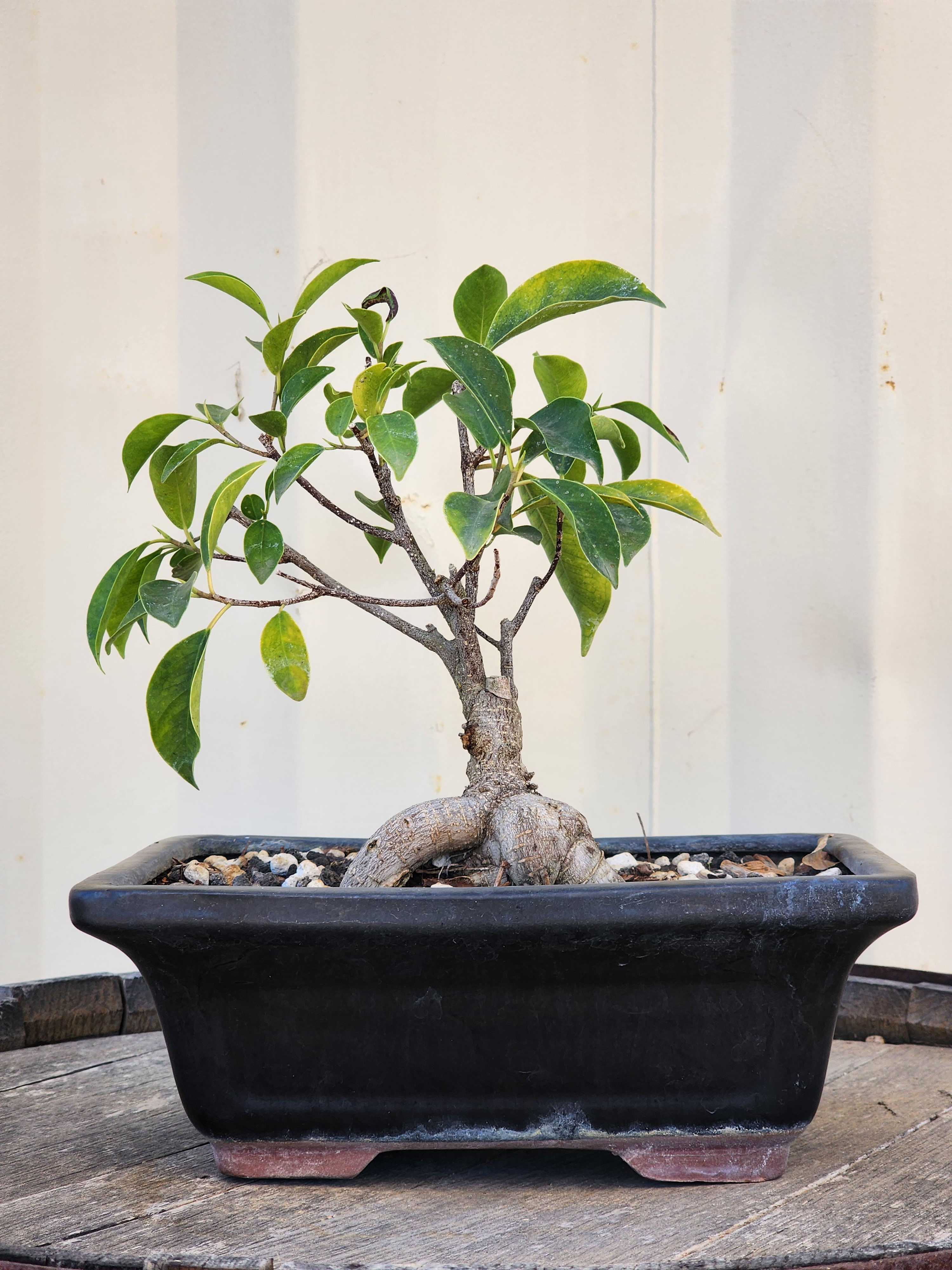

One of the most notable features of the Ginseng Ficus Bonsai is its ability to develop aerial roots that grow down from the branches or the base of the trunk, adding to its exotic and unique appearance. These roots can add additional layers of visual interest to the plant, making it even more captivating.
Overall, the Ginseng Ficus Bonsai is a resilient and beautiful plant that makes an eye-catching addition to any space, with its distinctive trunk, rich green foliage, and occasional root growth.
Bonsai measures between 10" to 16" tall potted and arrives in a 10 ceramic pot.
MINATURE GINSENG FICUS BONSAI
A Ginseng Ficus Bonsai (Ficus retusa) is a popular and striking type of bonsai known for its unique and appealing appearance. It features a thick, bulbous trunk at the base that resembles the shape of a ginseng root, which gives the tree its name. The trunk often has a slightly twisted or curving form, adding to its aesthetic charm.
The branches and leaves of the Ginseng Ficus are typically small and glossy, with dark green, oval-shaped leaves that are leathery to the touch. The leaves tend to grow densely, creating a lush canopy atop the thick, sculptural trunk.
Aerial Roots
- Encourage Aerial Roots: The Ginseng Ficus often develops aerial roots along the trunk, especially in a humid environment. If you wish to emphasize these, maintain high humidity and avoid cutting them unless necessary for pruning.
By following these care instructions, your Ginseng Ficus Bonsai will thrive and remain a beautiful addition to your indoor space!
The MINATURE GINSENG FICUS features a shorter bonsai style pt the accenttuates the shape of the root and stems. Bonsai measures between 10" to 16" tall potted and arrives in a 10 ceramic pot.
Caring for a Ginseng Ficus Bonsai requires attention to its basic needs for light, water, humidity, and temperature. Here’s a detailed guide to help you keep your Ginseng Ficus Bonsai healthy:
1. Light Requirements
- Bright, Indirect Light: Ginseng Ficus Bonsai thrives in bright, indirect light. It can tolerate some direct sunlight but should be protected from harsh midday rays, as this can scorch the leaves.
- Indoor Location: Since it’s an indoor plant, place it near a window where it will get plenty of natural light, but avoid direct sun for prolonged periods.
2. Watering
- Regular Watering: Water the bonsai when the top inch or two of soil feels dry. Ginseng Ficus does not like to stay completely dry or overly wet. Ensure that the soil is well-draining.
- Avoid Overwatering: Excess water can lead to root rot. Always check for drainage holes at the bottom of the pot, and ensure that any excess water can escape easily.
- Humidity: Ginseng Ficus prefers slightly higher humidity, so if you live in a dry climate or winter months dry out the air, consider using a humidity tray or misting the leaves occasionally.
3. Temperature
- Moderate Temperatures: The ideal temperature range is between 60°F and 75°F (15°C to 24°C). Avoid sudden temperature fluctuations or placing the plant in drafty areas (such as near air conditioners or heaters).
- Protection from Cold: Ginseng Ficus is sensitive to cold temperatures, so keep it indoors where it’s warm year-round.
4. Soil and Repotting
- Well-Draining Soil: Use well-draining, slightly acidic to neutral bonsai soil. A mix designed for tropical trees or a combination of akadama, pumice, and lava rock works well.
- Repotting: Repot the Ginseng Ficus Bonsai every 2-3 years or when the roots have outgrown their pot. Early spring is the best time to repot, as it allows the tree to adjust before the growing season starts.
5. Pruning and Shaping
- Regular Pruning: To maintain its shape and encourage healthy growth, prune the branches and leaves regularly. Trim any overly long or unwanted branches. You can also pinch the tips of the branches to promote branching and prevent the tree from becoming too leggy.
- Wiring: You can use bonsai wire to shape the branches, but be careful not to leave the wire on for too long, as it can damage the bark.
6. Fertilizing
- Balanced Fertilizer: Feed your Ginseng Ficus with a balanced, liquid bonsai fertilizer during the growing season (spring and summer), every 2-4 weeks. In the fall and winter, when the plant is in a resting phase, reduce feeding or stop altogether.
- Avoid Over-Fertilizing: Over-fertilizing can harm the tree, leading to excessive growth at the expense of the plant’s health.
Pests and Problems
- Common Pests: Ginseng Ficus can occasionally attract pests such as aphids, scale insects, or mealybugs. Regularly inspect the leaves and stems for any signs of pests, and treat the plant with an insecticidal soap if necessary.
- Leaf Drop: A common problem is leaf drop, which can be caused by sudden environmental changes, overwatering, or underwatering. If this happens, check the plant’s watering routine and make sure it's in a stable environment.
The Ginseng Ficus Bonsai (Ficus retusa) typically does not flower when grown indoors. While this species of Ficus can produce small, inconspicuous flowers in its natural habitat, it’s rare for them to bloom indoors. The flowers are typically tiny and not showy, often hidden within the leaf axils.
In bonsai cultivation, the focus is generally on maintaining the tree's shape and health rather than encouraging flowering. The primary appeal of the Ginseng Ficus Bonsai lies in its sculptural trunk and lush green foliage, as well as the development of aerial roots.
If you do want to encourage flowering, creating optimal conditions such as higher humidity, ample light, and proper care may help, but it’s important to note that flowering is not a common trait for this bonsai variety when kept indoors.


